

The Most Common Mistakes People Make When Trying to Stop Panic Attacks — and What Truly Helps
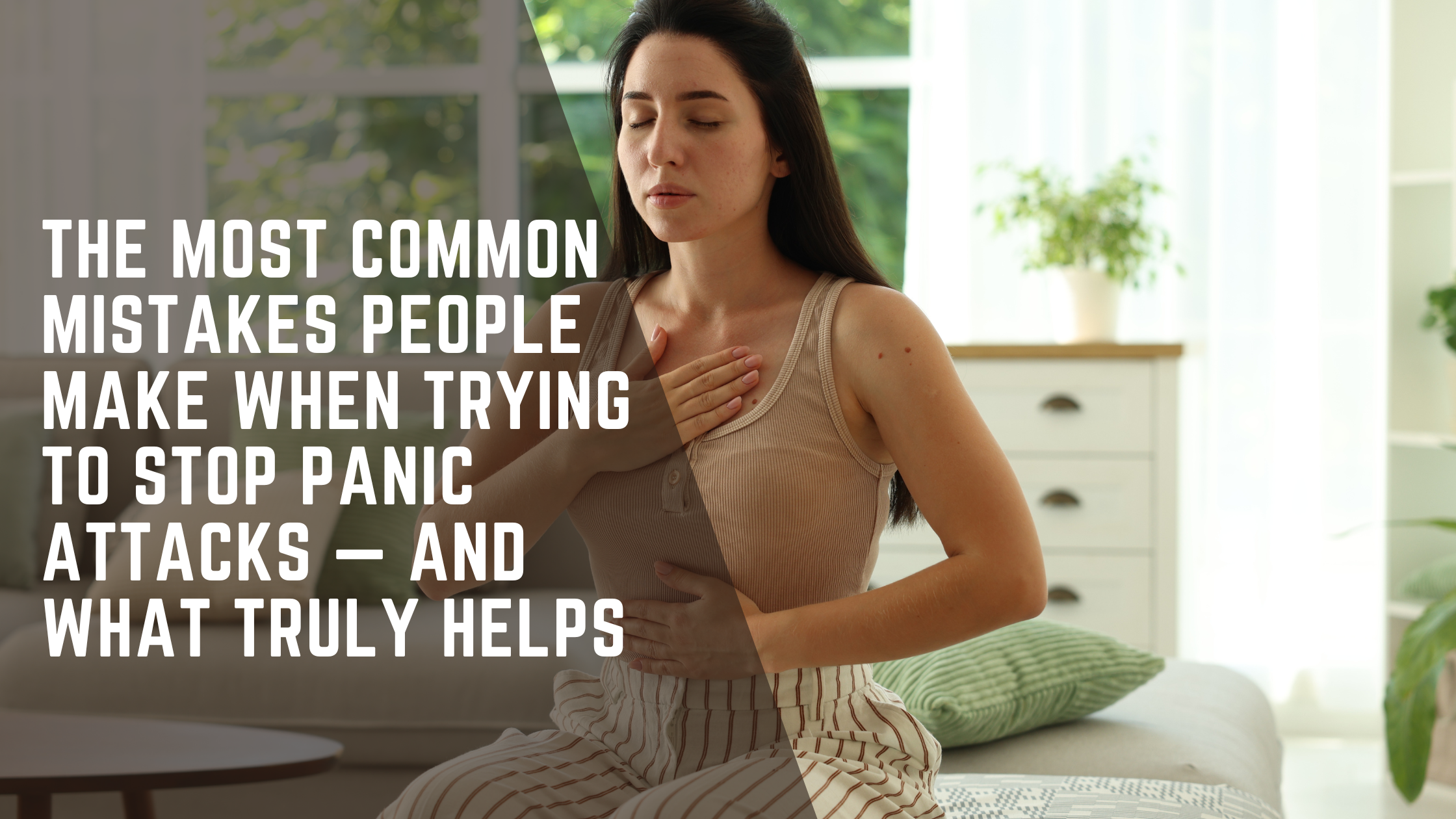
Panic attacks can be terrifying, overwhelming, and disruptive — leaving people feeling helpless and desperate for relief. The urge to make panic attacks stop for good is completely understandable. However, in that urgency, many people fall into common pitfalls that actually make their anxiety worse. If you or someone you care about experiences panic attacks, understanding what doesn’t work is just as important as discovering what truly helps.
In this blog, we’ll explore the most common mistakes people make when trying to stop panic attacks and highlight evidence-based strategies that genuinely reduce symptoms and support long-term healing.
Mistake #1: Trying to Fight or Suppress the Panic
One of the biggest errors people make is trying to force panic attacks away — to resist, fight, or ignore the sensations. While it may feel like the logical approach, this often backfires.
Why? Because panic is driven by fear of the sensations themselves. When you struggle against the physical symptoms — a racing heart, shortness of breath, dizziness — your nervous system interprets that struggle as danger. The brain responds with more adrenaline, amplifying the panic cycle.
What Works Instead:
Acceptance and Mindfulness: Research shows that acknowledging your feelings — without judgment — reduces the intensity of panic attacks. Instead of “I must get rid of this,” try saying to yourself, “I’m noticing these sensations, and they are uncomfortable, but they will pass.”
Grounding Techniques: Focusing on physical sensations like your breath, feet on the ground, or textures around you can break the cycle of fear and reduce panic’s grip.
This subtle shift from resistance to acceptance often cuts off panic before it escalates.
Mistake #2: Catastrophizing Physical Sensations
When an unexpected physical symptom shows up — a fluttering heart, tingling fingers — some people immediately jump to the worst possible conclusion: “I’m having a heart attack” or “I’m going crazy.”
This type of catastrophic thinking fuels anxiety and triggers more panic. The brain doesn’t distinguish between real danger and perceived danger — so if you think a harmless sensation is life-threatening, your body responds accordingly.
What Works Instead:
Cognitive Restructuring: This is a core part of Cognitive Behavioral Therapy (CBT). It involves identifying and challenging irrational thoughts, and replacing them with realistic ones.
Instead of “I’m dying,” you say: “This feeling is unpleasant, but it’s not dangerous.”
Education on Anxiety Physiology: Understanding why panic attacks cause specific symptoms empowers you to respond with calm rather than fear.
Mistake #3: Relying on Avoidance
Avoidance — like skipping social events, not leaving the house, or refusing to exercise because of fear of panic — might seem like it keeps panic at bay. In reality, avoidance reinforces anxiety and worsens it over time.
Each time you avoid a situation, your brain learns: “That place or activity is dangerous.” This strengthens anxiety and makes future panic attacks more likely.
What Works Instead:
Gradual Exposure Therapy: Facing fears slowly and systematically helps desensitize your nervous system. Under guidance, you create a hierarchy of feared situations and approach them step by step.
Behavioral Activation: Staying engaged in meaningful activities reduces anxiety and prevents the brain from making panic a central focus.
Mistake #4: Believing You Should Be Able to “Just Calm Down”
Many people berate themselves during panic attacks, thinking: Why can’t I just calm down? This self-judgment increases stress and actually sustains panic.
Panic attacks are not a matter of willpower. They are neurological responses that require specific techniques — not self-criticism — to manage.
What Works Instead:
Self-Compassion: Treat yourself with the same kindness you would offer a friend. Research links self-compassion with lower anxiety and improved emotional resilience.
Breathing Exercises: Simple practices like slow diaphragmatic breathing reduce sympathetic arousal — the fight-or-flight response that fuels panic.
Mistake #5: Thinking You Have to Do It Alone
Many people believe they should handle panic attacks by themselves. While self-help tools are valuable, panic and anxiety often benefit from professional support.
Untreated panic attacks can lead to:
Persistent anxiety
Avoidance behaviors
Agoraphobia (fear of open or public places)
Reduced quality of life
What Works Instead:
Therapy with a Licensed Professional: Therapies like CBT, exposure therapy, and acceptance-based approaches are backed by scientific research and effective for panic disorders.
Support Systems: Family, friends, and support groups offer encouragement and motivation — essential components of long-term recovery.
Conclusion
Panic attacks can feel overwhelming, but the path to relief starts with understanding what doesn’t work as much as what does. Fighting sensations, catastrophic thinking, avoidance, self-judgment, and isolation are common traps — yet with mindful acceptance, cognitive reframing, exposure techniques, and professional guidance, panic becomes manageable.
If panic attacks are affecting your daily life, know that help is available. Taking the step toward effective support can make all the difference in reclaiming confidence, calm, and control. For individuals seeking expert care, the Best Mental Health Counseling in Oneonta, NY offers compassionate, evidence-based treatment tailored to your journey toward peace and well-being.